ISS Oxygen Generation Assembly
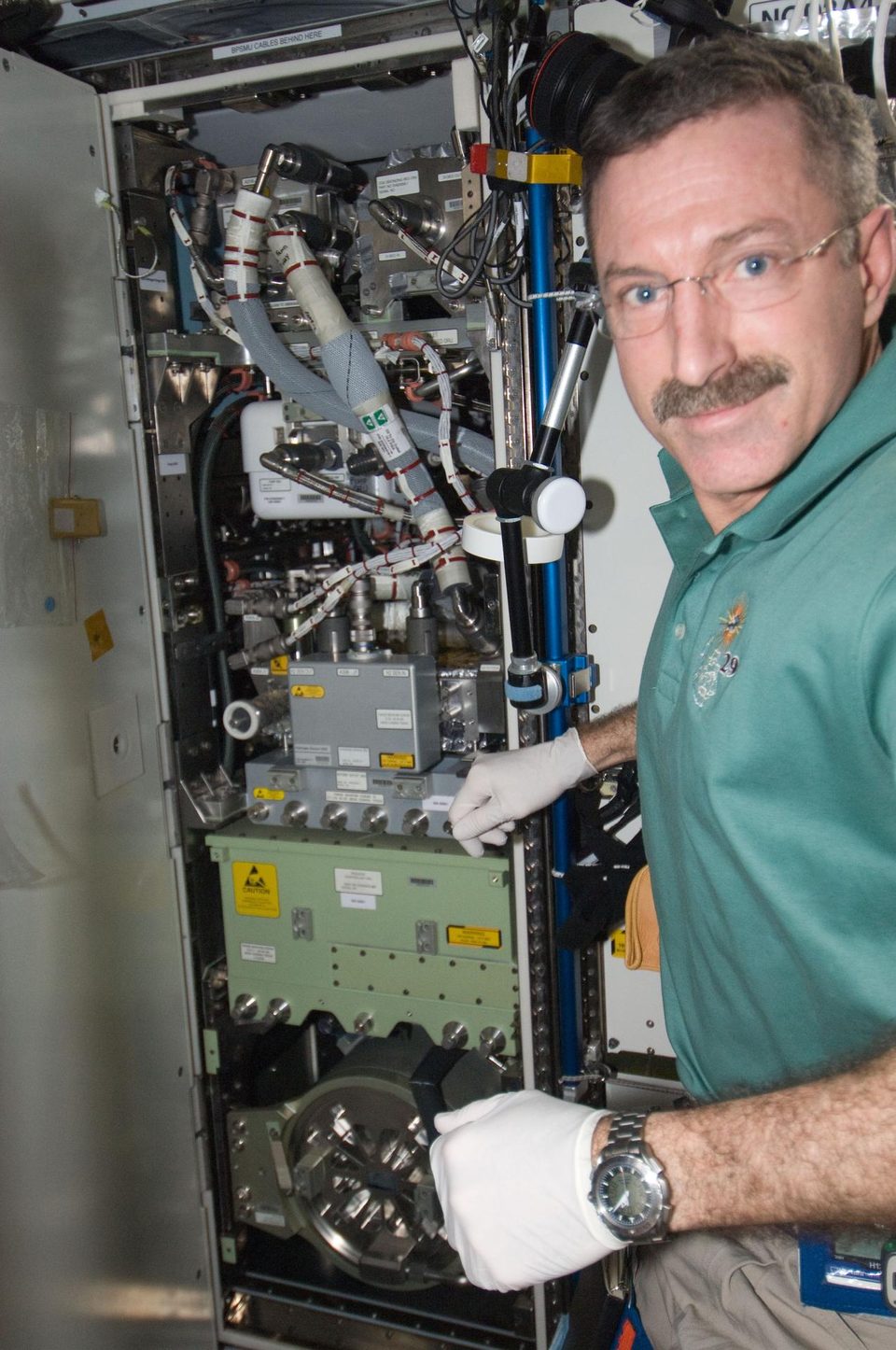
Flight-proven since 2007; nominal 5.4 kg O₂/day
What it is
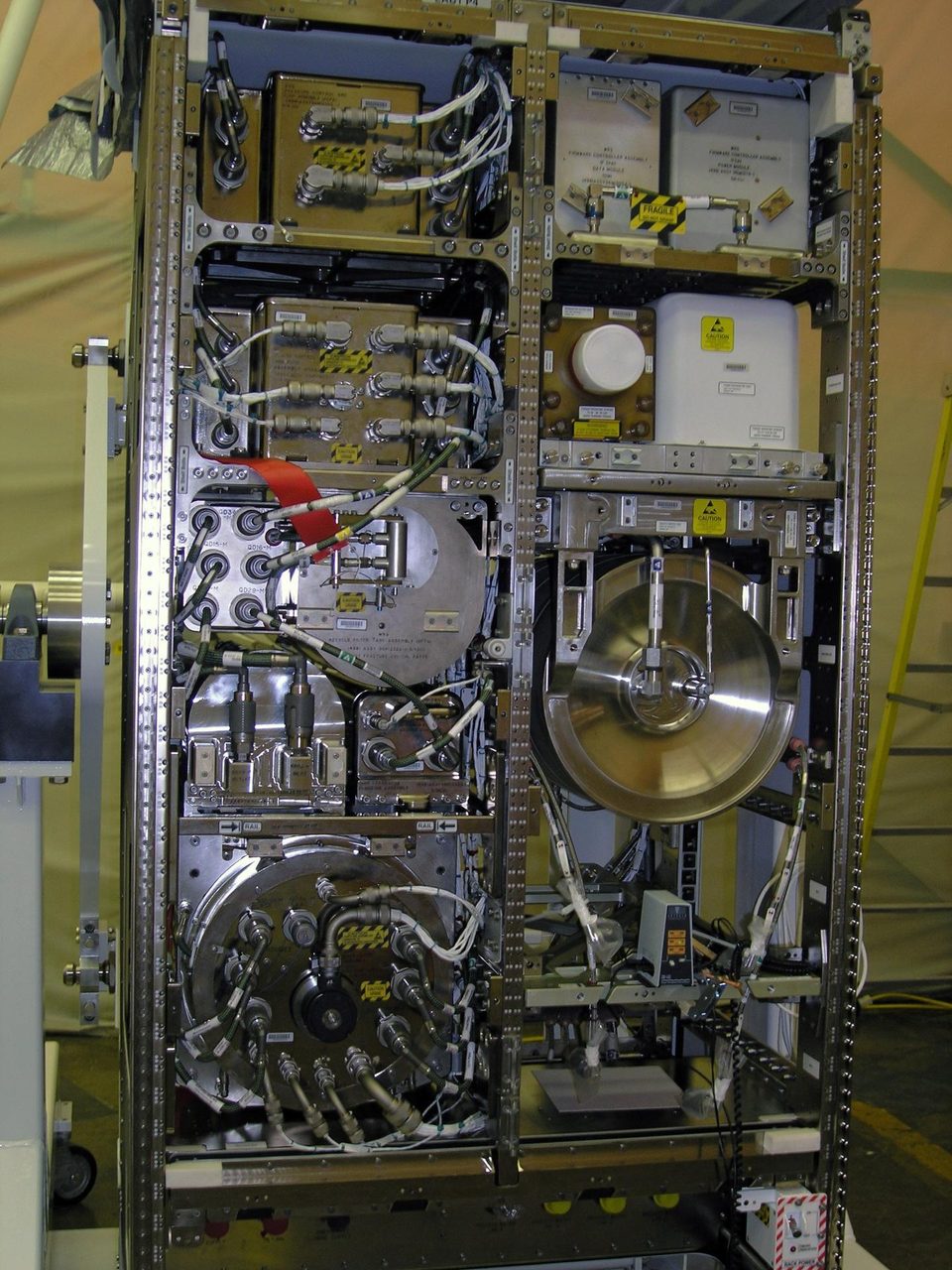
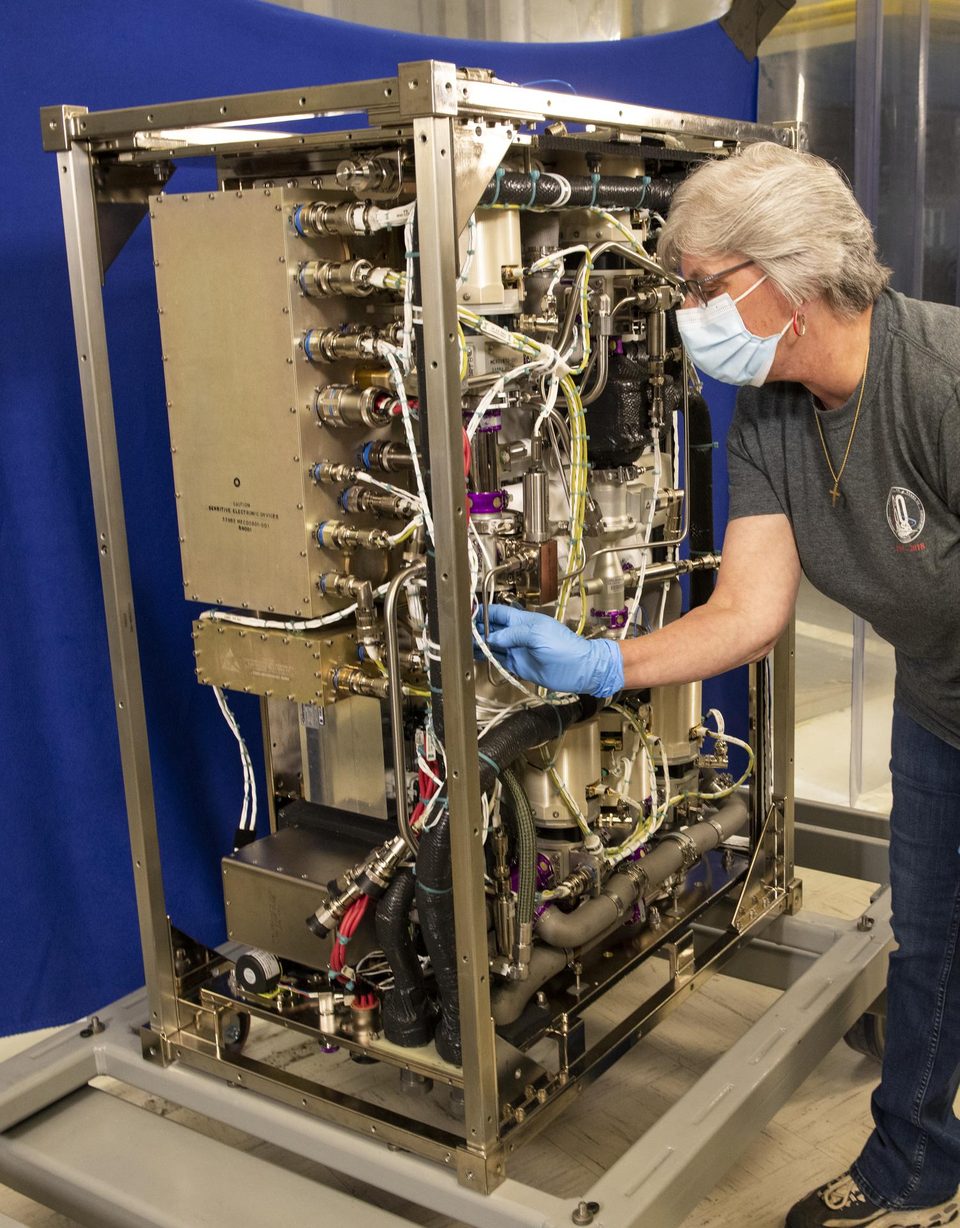
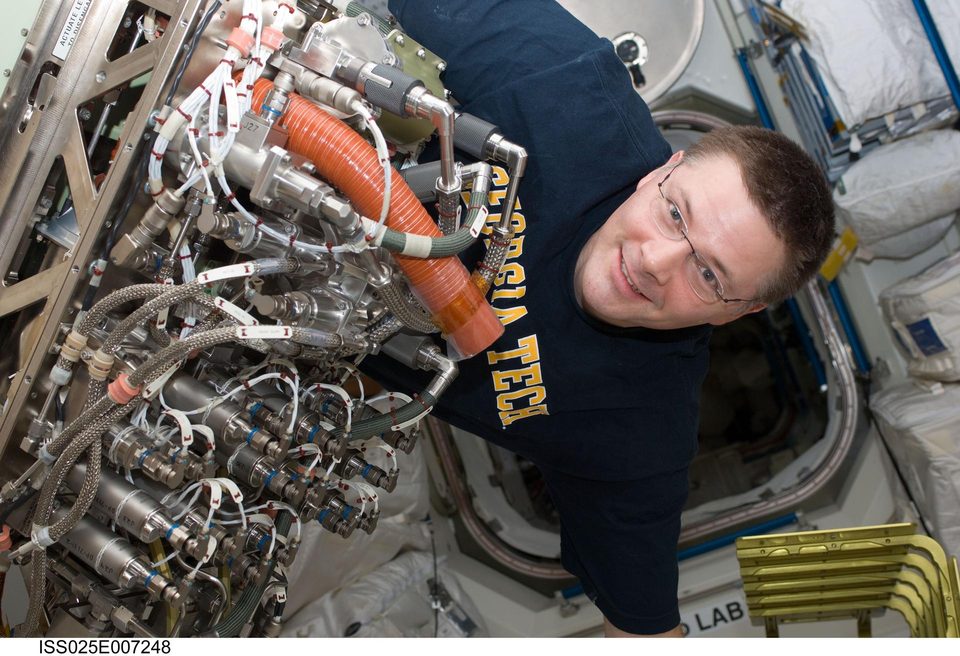
The Oxygen Generation Assembly (OGA) is the machine that makes most of the breathing oxygen in the US side of the International Space Station. It splits clean water into oxygen and hydrogen with electricity (water electrolysis). The oxygen goes into the cabin. The hydrogen is either vented to space or fed to a Sabatier reactor that turns crew-exhaled CO₂ back into water (NASA). The OGA sits in the Oxygen Generation System (OGS) rack together with that Sabatier unit and the cell stack power supply (NASA NTRS, 2015).
It was designed and tested by NASA Marshall Space Flight Center and Hamilton Sundstrand (Spaceflight Now), a business now part of Collins Aerospace (NASA NTRS, 2019). The rack was launched in July 2006 and first switched on for 15 hours in July 2007 (NASA NTRS, 2008). It was part of the regenerative life support that let the station grow from three to six crew (NASA NTRS, 2015). The rack moved from the US Lab to Node 3 in February 2010, and back to the US Lab in September 2022 (NASA NTRS, 2015; NASA NTRS, 2025).
As of 30 April 2025 the OGA had been running for 18 years and had made 14,598 kg of oxygen and 1,825 kg of hydrogen (NASA NTRS, 2025). Its nominal rate is 5.4 kg of oxygen per day, enough for four crew plus leakage and science specimens (NASA NTRS, 2015). NASA is now building an upgraded Advanced OGA (AOGA). It is planned to fly to the ISS as a kit in the 2026 timeframe and to be demonstrated there for at least three years (NASA NTRS, 2025).
Why Open Moon uses it
Water electrolysis is the simplest proven way to turn water into oxygen, and the OGA is the most flown example. Open Moon uses it in two places.
- M06 (ISRU pilot): water processing at the pilot plant splits cleaned water on demand, using electrolysis with ISS OGA heritage. It is the TRL 9 reference against which the newer regolith-oxygen processes are compared.
- M09 (permanent crew): the base’s life support copies the ISS loop: water recovery, CO₂ removal, Sabatier, and oxygen generation by electrolysis.
Without an electrolyser the base would have to ship all its oxygen, or rely on unproven regolith plants for every breath. The OGA design also gives a hydrogen stream that a base can store or feed to a Sabatier reactor instead of venting.
How it works
Potable water from the station’s water processor enters through a deionising bed. That bed removes iodine and traps gas bubbles; water with bubbles is rejected. The water is split in an electrolysis cell stack. A rotary separator pulls hydrogen gas out of the water, and a pump recirculates the water through an ion-exchange filter (ACTEX) that removes fluoride shed by the cell membranes. Hydrogen sensors check the product oxygen for leaks and trigger a fast shutdown. Nitrogen purges the stack at start-up and shutdown so oxygen and hydrogen never mix. All hydrogen-carrying parts sit inside a dome vented to vacuum (NASA NTRS, 2019).
The stack has 28 cells, each with a Nafion polymer membrane (NASA NTRS, 2019). In Standby a healthy cell sits at about 1.53 V, just above the 1.48 V thermoneutral voltage (NASA NTRS, 2025).
| Specification | Value |
|---|---|
| Nominal O₂ output (orbital day/night cycling) | 5.4 kg/day (4 crew) |
| Continuous output range | 2.3 to 9.2 kg/day (22 to 100%) |
| Maximum rate supports | 7 crew plus leakage and specimens |
| Cell stack current | 10 to 46.9 A in Process; 1.0 A in Standby |
| Cells in stack | 28 |
| Hydrogen ORU (dome and stack) launch mass | about 136 kg |
| Total O₂ produced (to Apr 2025) | 14,598 kg |
| Electrical power draw | not given in the sources used here |
Sources: NASA NTRS, 2015; NASA NTRS, 2019; NASA NTRS, 2025.
Limitations and open issues
- Cell stack life. Stacks failed by low cell voltage in 2016 and 2021, traced to membrane thinning. In one stack, cell 1’s membrane had thinned by about 90% in places (NASA NTRS, 2019). Another stack was pulled in September 2024 after only about 2.5 years, likely because a bigger crew meant higher output (NASA NTRS, 2025).
- Water quality. Early on the OGA ran only now and then because of filter clogging and acid build-up. A deionising bed added in 2011 fixed this, and a stack was replaced after cation contamination (NASA NTRS, 2011). Lunar ice water would need thorough cleaning first.
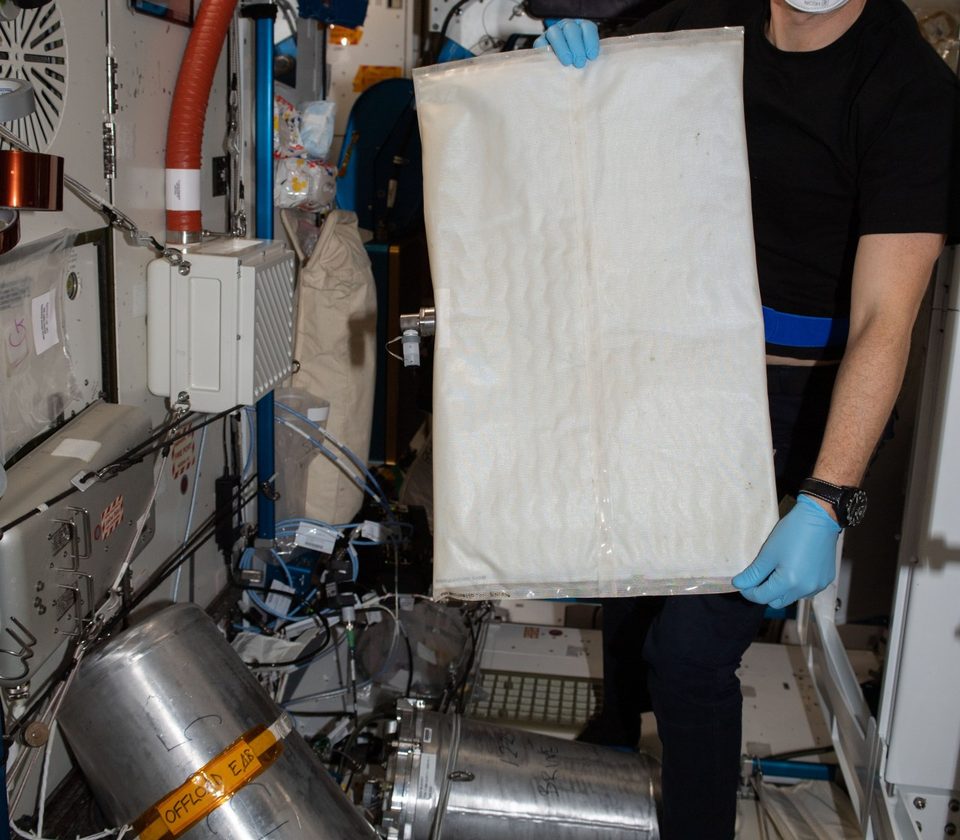
- Maintenance and spares. One failed part inside the dome means replacing the whole ~136 kg Hydrogen ORU, which can only be repaired on the ground (NASA NTRS, 2025).
- Short repair window. The ISS cabin holds days of oxygen. A smaller exploration habitat may hold only hours, so downtime must be far shorter (NASA NTRS, 2025).
- Upgrades not yet proven in flight. The AOGA’s new stack, dome and sensors finished design and ground tests but had not flown as of mid-2025 (NASA NTRS, 2025).
- Lunar gravity and dust. The OGA was built for microgravity. We found no published test of it in lunar gravity or lunar dust.
- Not fully closed. Without the Sabatier unit the hydrogen is lost, and even with it the methane is vented (NASA), so water must still be topped up.
| Alternative | How it compares | Status |
|---|---|---|
| Elektron (Russian water electrolyser) | Also splits water to make cabin oxygen and vents the hydrogen overboard. It has flown on Mir and the ISS, but has a long record of failures and in-place repairs, so it is a useful backup rather than a better design. | Operational on the ISS Russian segment; failed again in October 2020 and was repaired |
| ESA Advanced Closed Loop System (ACLS) | An Airbus-built rack that bundles its own water electrolyser with CO2 capture and a Sabatier reactor, so it recovers part of the water used for oxygen. More closed than a stand-alone OGA, but heavier and more complex, and still vents methane. | Flown to the ISS on HTV-7 in 2018 as a demonstrator sized for three astronauts |
| Chemical oxygen candles (Vika / SFOG) | Lithium perchlorate canisters release oxygen when heated. No power, no water, very simple, but each canister is used once and gives one crew member about one day of oxygen, so it only suits emergencies. | Flight-proven backup on the ISS |
| Solid oxide CO2 electrolysis (MOXIE) | Splits carbon dioxide instead of water, at about 800 °C. Useful where CO2 is plentiful (Mars) or to close the cabin CO2 loop, but the flight unit made only grams per hour, far below crew needs. | Mars demonstration finished in 2023 after 122 g of oxygen; no crew-scale unit has flown |
| Oxygen from regolith (molten salt or molten regolith electrolysis) | Takes oxygen straight from lunar soil, so it needs no water at all and leaves metals as a by-product. It is a production plant, not a cabin life-support unit, and needs very high temperatures and much more power. | Ground prototypes only, such as ESA's 2020 oxygen plant |
- official NASA NTRS: Advanced Oxygen Generation Assembly for Exploration Missions (ICES-2019-107) (Jul 2019)
- official NASA NTRS: Status of the Advanced Oxygen Generation Assembly (ICES-2025-345) (Jul 2025)
- official NASA NTRS: Advancing the OGA Design to Increase Reliability and Reduce Costs (ICES-2015-115) (Jul 2015)
- official NASA NTRS: On-orbit ISS Oxygen Generation System operation status (2011)
- official NASA NTRS: ISS USOS Oxygen Generation System on-orbit operational experience (Jun 2008)
- official NASA: Environmental Control and Life Support Systems (ECLSS) (Apr 2025)
- official NASA Image Library: Dan Burbank servicing the Oxygen Generator System rack (Apr 2012)
- press Spaceflight Now: NASA oxygen generation system activated on the space station (Jul 2007)
- wiki Wikipedia: ISS ECLSS (2026)
- wiki Wikipedia: Electrolysis of water (2026)
- official ESA: Advanced Closed Loop System (Sep 2018)
- wiki Wikipedia: Chemical oxygen generator (2026)
- official NASA: Oxygen-generating experiment MOXIE completes Mars mission (Sep 2023)
- official ESA: ESA opens oxygen plant making air out of moondust (Jan 2020)
Summary
| System | Habitation and life support |
| Phase | 1, 3 |
| Milestones | M06, M09 |
| Readiness | TRL 9 / 9 |
| Plan status | ready to use |
Sources
- NASA NTRS 20190030425: ISS Oxygen Generation Assembly (status and facts)
- Image: NASA
More sources are on each milestone page that uses this technology.