Four-bed CO₂ scrubber (4BCO2)
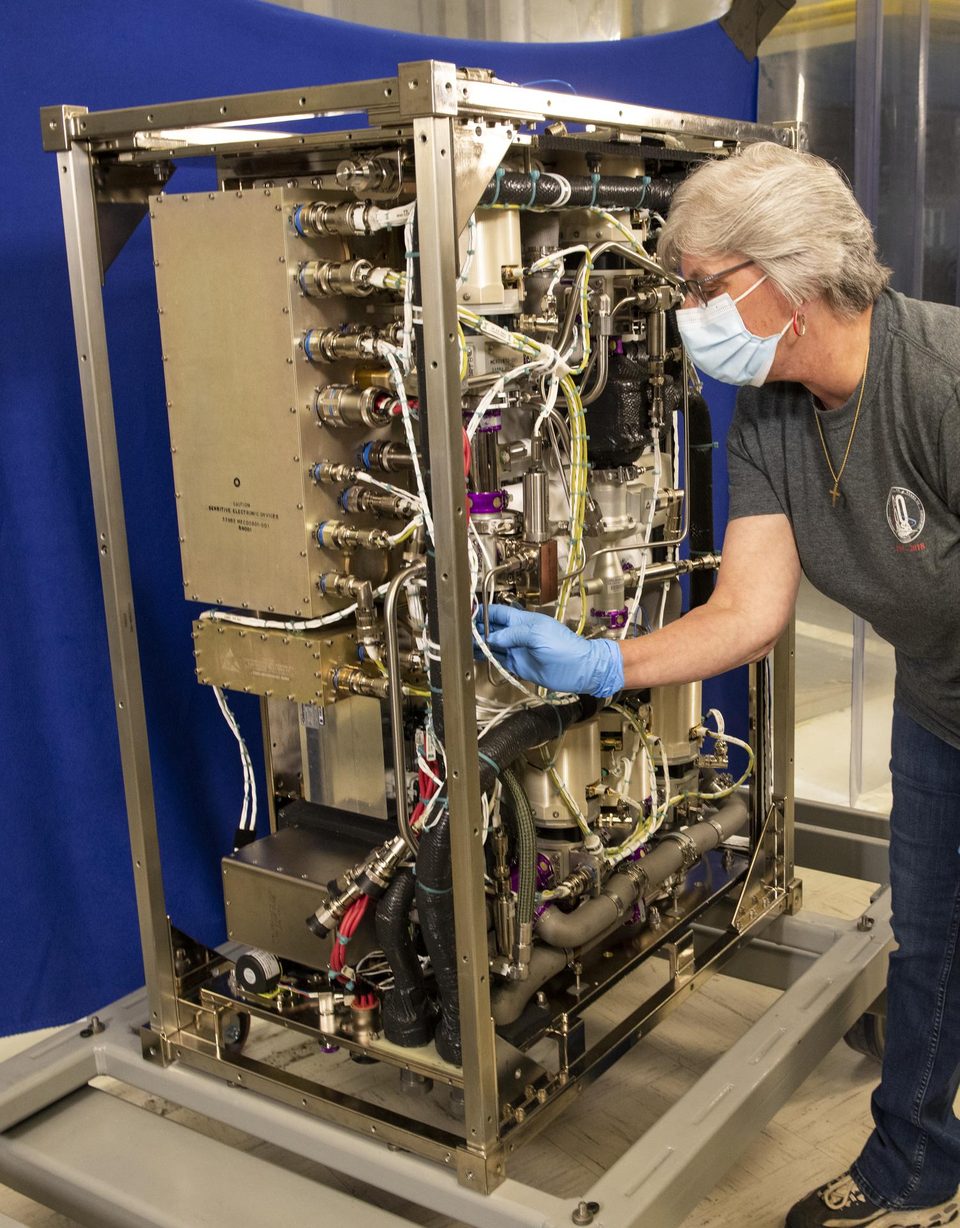
Flew as an ISS demonstration; became a permanent ISS system in July 2025; NASA's 2026 trade study rates it TRL 9
What it is
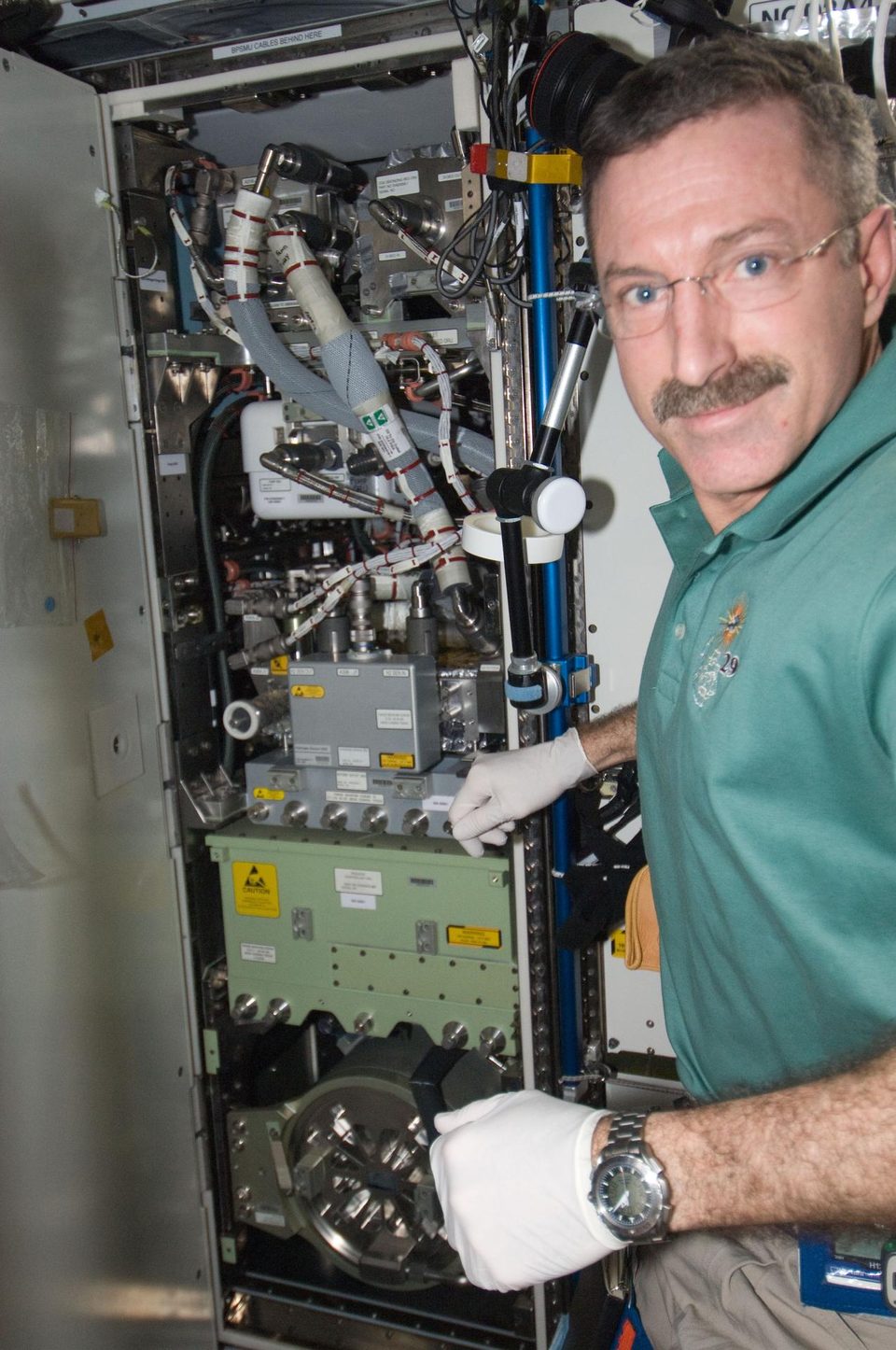
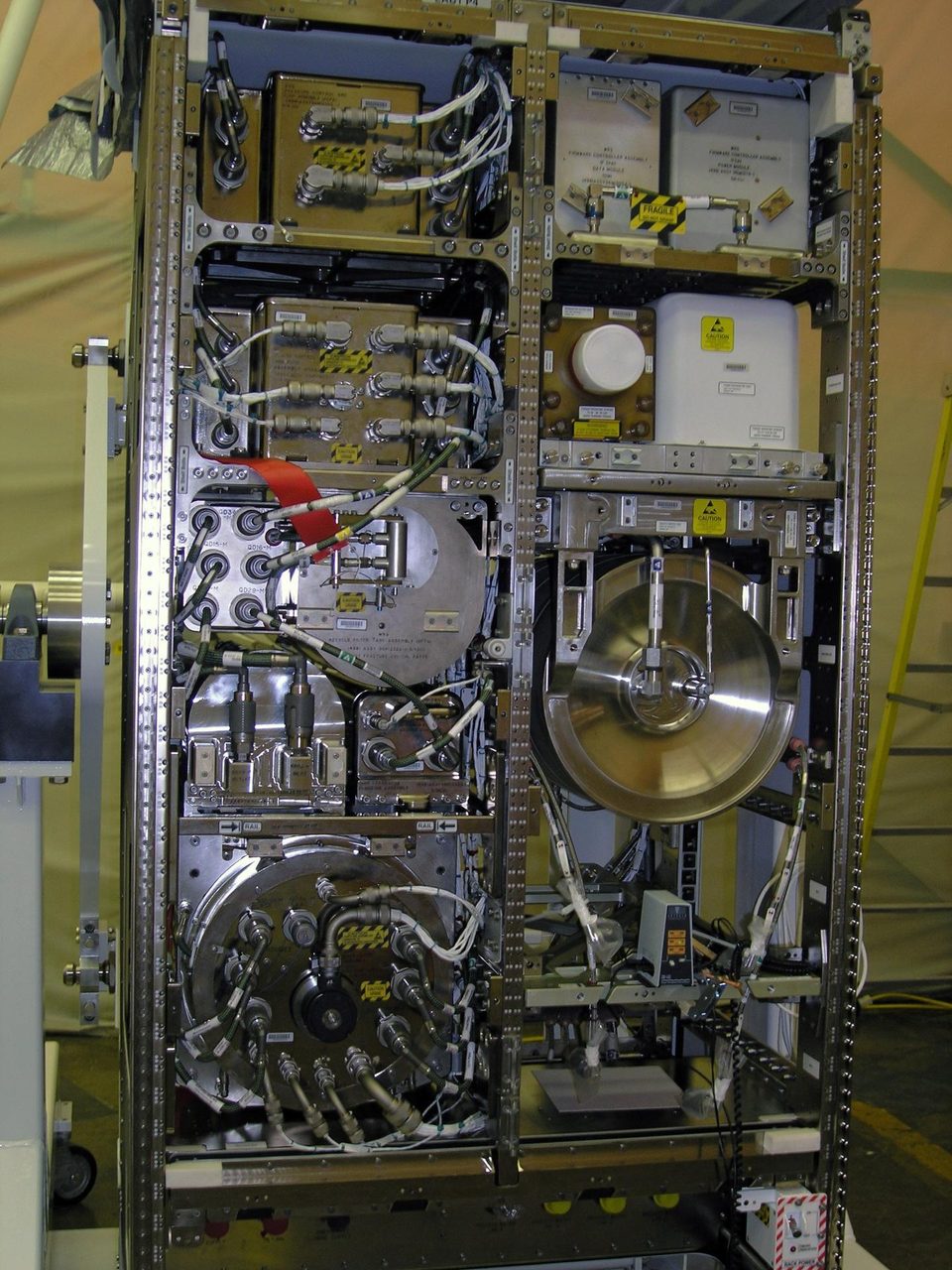
The Four-Bed CO₂ Scrubber (called 4BCO2 or FBCO2) is a machine that pulls the carbon dioxide that people breathe out of cabin air. NASA’s Marshall Space Flight Center designed, built and tested it as a redesign of the space station’s original Carbon Dioxide Removal Assembly (CDRA), which has done this job since 2001. The CDRA had a long history of unplanned maintenance and obsolete parts, so 4BCO2 was built to run for 3 years with no unplanned maintenance while removing the CO₂ of 4 crew at a cabin CO₂ level of 2 torr.
The unit launched to the ISS in August 2021 and was activated in September 2021, flying on Cygnus NG-16. Its design goal was 4.16 kg of CO₂ per day at 2 mmHg. It reached its goal of 3 years of run time in February 2025, became an official ISS system in July 2025, and is now the main CO₂ scrubber in the US segment. The ISS Program plans to run it full time until the station retires in 2030 (NASA, 2026).
In February 2025 the ISS held 12 crew during a handover and kept average CO₂ below 3.0 mmHg. In February 2026, 4BCO2 was the only CO₂ removal system for a crew of 7 (NASA, 2026). The site’s data file lists it at TRL 7; a 2026 NASA trade study rates it TRL 9 for lunar missions.
Why Open Moon uses it
Every crewed habitat must remove CO₂ all the time. In Open Moon, 4BCO2 is the CO₂ removal step of life support closure in milestone M09, permanent crew. It works next to water recovery, oxygen generation and a Sabatier reactor.
It was chosen because it is the most proven regenerative scrubber that can also feed CO₂ onward. Four-bed systems produce high-purity, dry CO₂ that a Sabatier reactor can use without extra cleanup, which the ISS has done with CDRA (Wikipedia). In NASA’s 2026 equivalent-mass study for a lunar surface habitat, 4BCO2 scored 406 kg, lower than CDRA (483 kg), the Thermal Amine Scrubber (798 kg) and the ionic-liquid system without Sabatier (419 kg). Only the Orion swing bed scored lower, and it vents much more cabin gas and cannot feed a closed loop.
Without a regenerative scrubber, the base would need single-use lithium hydroxide canisters shipped from Earth for as long as crew live there, and there would be no CO₂ stream to recover water and oxygen from.
How it works
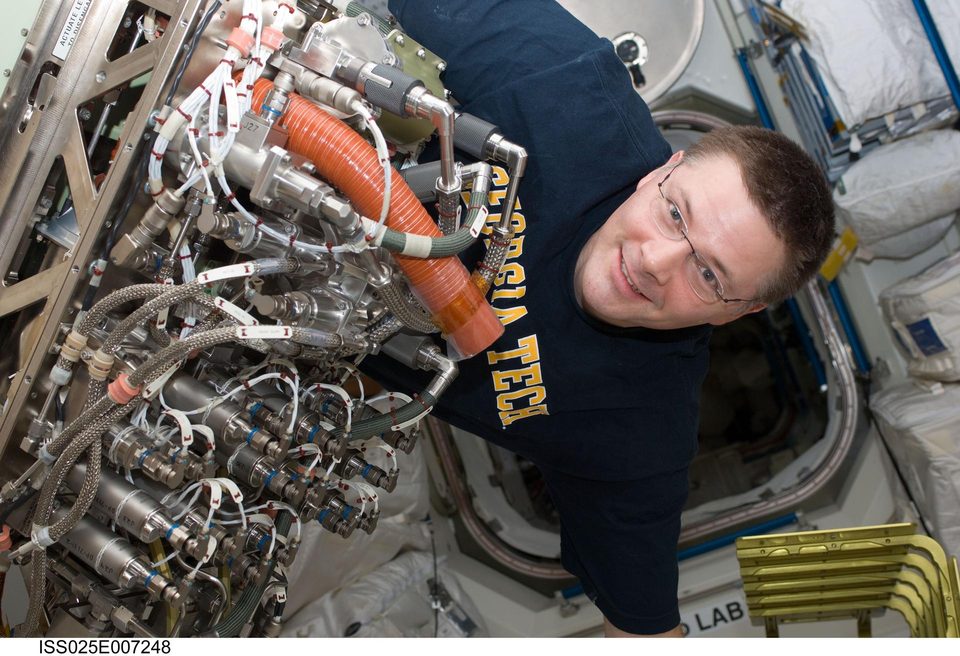
Cabin air is drawn in by a blower and passes through two pairs of beds. In each half-cycle, a desiccant bed takes out water vapour, then a zeolite 13X bed captures CO₂, then the air passes a second desiccant bed that puts the water back before returning to the cabin. Meanwhile the other CO₂ bed is heated by built-in heaters. An air-save pump first pulls the trapped air back for 10 minutes, then the bed is opened to space vacuum so CO₂ leaves. The beds then swap roles.
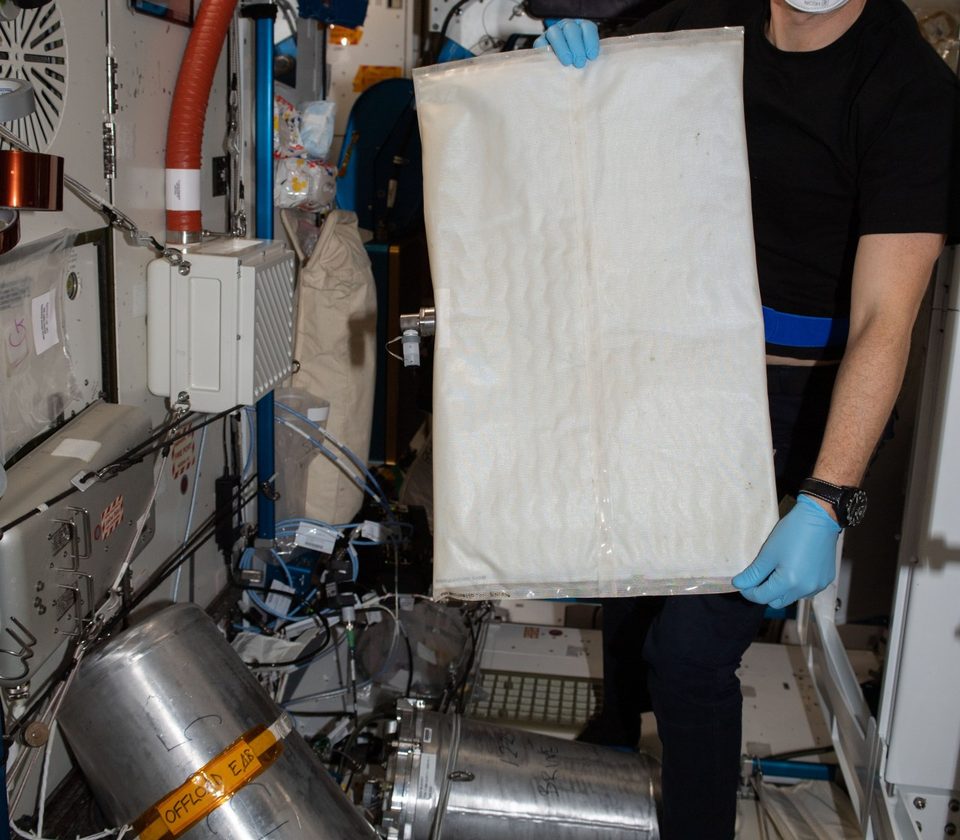
Key changes from CDRA include round instead of rectangular beds, rod heaters, a more stable zeolite, gentler valves and a cleanable pleated filter. Filters returned in 2024 held only 0.03 g of dust, 2 to 3 orders of magnitude less than CDRA. A magnetic-bearing blower from Calnetix was installed in early 2023.
| Specification | Value |
|---|---|
| Design CO₂ removal | 4.16 kg/day at 2 mmHg (NASA 2026) |
| Removal used in trade study | 4.5 kg/day at 2 mmHg; 6.9 kg/day at 3 mmHg (NASA 2026) |
| Air flow | 30.0–33.0 scfm at 60,000 rpm blower speed (NASA 2026) |
| Projected power | 975 W average, 1,350 W peak (NASA 2020) |
| Projected mass | 515 lb core system, versus 440 lb for CDRA (NASA 2020) |
| Bed heating | Nominally 400°F (NASA 2020) |
| Supply power | 120 V DC (NASA 2020) |
The 2020 power and mass numbers are pre-flight projections for the flight demonstration unit. The 2026 trade study says 4BCO2 uses more power than CDRA but needs less cooling. Measured on-orbit power figures were not found in the public papers.
Limitations and open issues
- Only flown in microgravity. All flight data come from the ISS. No published test covers lunar gravity, lunar dust in the cabin, or a lunar habitat’s cooling and power systems.
- Mass of the flight unit. The demonstration unit far exceeded its mass target, and it will not fit through a Gateway-sized hatch in one piece. A purpose-built lunar version still has to be designed.
- Wearing parts. The commercial air-save pump failed after about 2,700 hours in 2024, and the cause is still unknown. The spare was missing a check valve, which forced a workaround until a new valve flew in 2025.
- Power sensitivity. A power spike tripped a breaker. The fix first limited blower speed and CO₂ removal until a resistor bypass box was installed in 2025.
- Shared air supply. Removal drops when CDRA draws from the same duct, and it changes with coolant temperature (NASA 2026). A lunar habitat would need its own air and cooling design.
- Vacuum and venting. On the ISS the CO₂ is vented to space vacuum. Open Moon wants to send it to a Sabatier reactor instead. That link has worked with CDRA, but no 4BCO2 flight data with a Sabatier reactor were found.
- Long-term zeolite life. The demonstration unit’s adsorbent beds are not replaceable, so NASA plans periodic filter checks to track sorbent wear. Life beyond about 4 years has not been shown.
| Alternative | How it compares | Status |
|---|---|---|
| Carbon Dioxide Removal Assembly (CDRA) | The original ISS four-bed molecular sieve that 4BCO2 was redesigned from. Same principle and similar performance, but a long record of zeolite dusting, valve failures and obsolete parts; NASA's 2026 trade study gives it a higher lunar-surface equivalent mass (483 kg vs 406 kg) but lower power use. | Flown on ISS since 2001 (TRL 9); being supplemented and partly replaced by 4BCO2 |
| Thermal Amine Scrubber (TAS) | Solid-amine beds that are heated and cooled to swing CO₂ on and off, instead of zeolite. Avoids zeolite dust, but NASA's 2026 trade study found it has by far the largest volume, high mass and power, and lower CO₂ removal than 4BCO2. | ISS flight experiment since 2019; has had failures and returns to service |
| Orion CO₂ and Humidity Control (CHC) amine swing bed | Vacuum-swing amine beds that remove CO₂ and water together with no heating or cooling. Lowest mass, volume and power of the candidates, but with no air-save pump it vents much more oxygen and nitrogen, and it cannot feed CO₂ to a Sabatier reactor. | Flew on Artemis I; amine swing bed earlier tested on ISS |
| CO₂ Removal by Ionic Liquid Sorbent (CDRILS) | Honeywell system that pumps a liquid sorbent through membrane contactors, with no swinging beds. Loses no cabin gas and is designed to feed a Sabatier reactor, but needs more volume and cooling; on the lunar surface it trades slightly worse than 4BCO2 in NASA's 2026 study. | Ground prototypes, TRL about 5 |
| Lithium hydroxide canisters | Single-use chemical absorbent used since Apollo. Very simple and needs no power, but every kilogram of CO₂ removed needs fresh canisters shipped from Earth, so it does not suit a permanent base. | Mature, used on short missions and as backup |
- official NASA NTRS ICES-2020-178: 4-Bed CO₂ Scrubber, From Design to Build (Jul 2020)
- official NASA NTRS ICES-2026-114: Status of the Four Bed CO₂ Scrubber ISS Technology Demonstration 2024-2026 (Jul 2026)
- official NASA NTRS ICES-2024-31: Status of the Four Bed CO₂ Scrubber ISS Technology Demonstration 2023-2024 (Jul 2024)
- official NASA NTRS ICES-2023-116: Status of the Four Bed CO₂ Scrubber ISS Technology Demonstration 2022-2023 (Jul 2023)
- official NASA NTRS ICES-2022-78: Performance of the Four Bed CO₂ Scrubber ISS Technology Demonstration (Jul 2022)
- paper NASA NTRS ICES-2026-160: Equivalent System Mass Comparison of ECLSS CO₂ Removal Technologies (Jul 2026)
- official NASA: Marshall ships next-generation air filtration hardware for flight to the ISS (Jun 2021)
- official NASA Image Library: 4-Bed CO₂ Scrubber checkout at Marshall (MSFC-202100245) (2021)
- press collectSPACE: NASA tests magnetic bearing blower on space station CO₂ scrubber (Apr 2023)
- wiki Wikipedia: ISS ECLSS (2026)
- wiki Wikipedia: Carbon dioxide scrubber (2026)
- paper NASA NTRS: Scale-Up of the CO₂ Removal by Ionic Liquid Sorbent (CDRILS) System (2019)
- paper NASA NTRS: First Principles Modeling of the Thermal Amine Scrubber Flight Experiment (2023)
- official NASA NTRS: Amine Swingbed Payload Technology Demonstration (2014)
Summary
| System | Habitation and life support |
| Phase | 3 |
| Milestones | M09 |
| Readiness | TRL 9 / 9 |
| Plan status | ready to use |
Sources
- NASA NTRS ICES-2020-178: Four-Bed CO₂ Scrubber (status and facts)
- Image: NASA/MSFC/Fred Deaton
More sources are on each milestone page that uses this technology.