ISS life support (ECLSS)
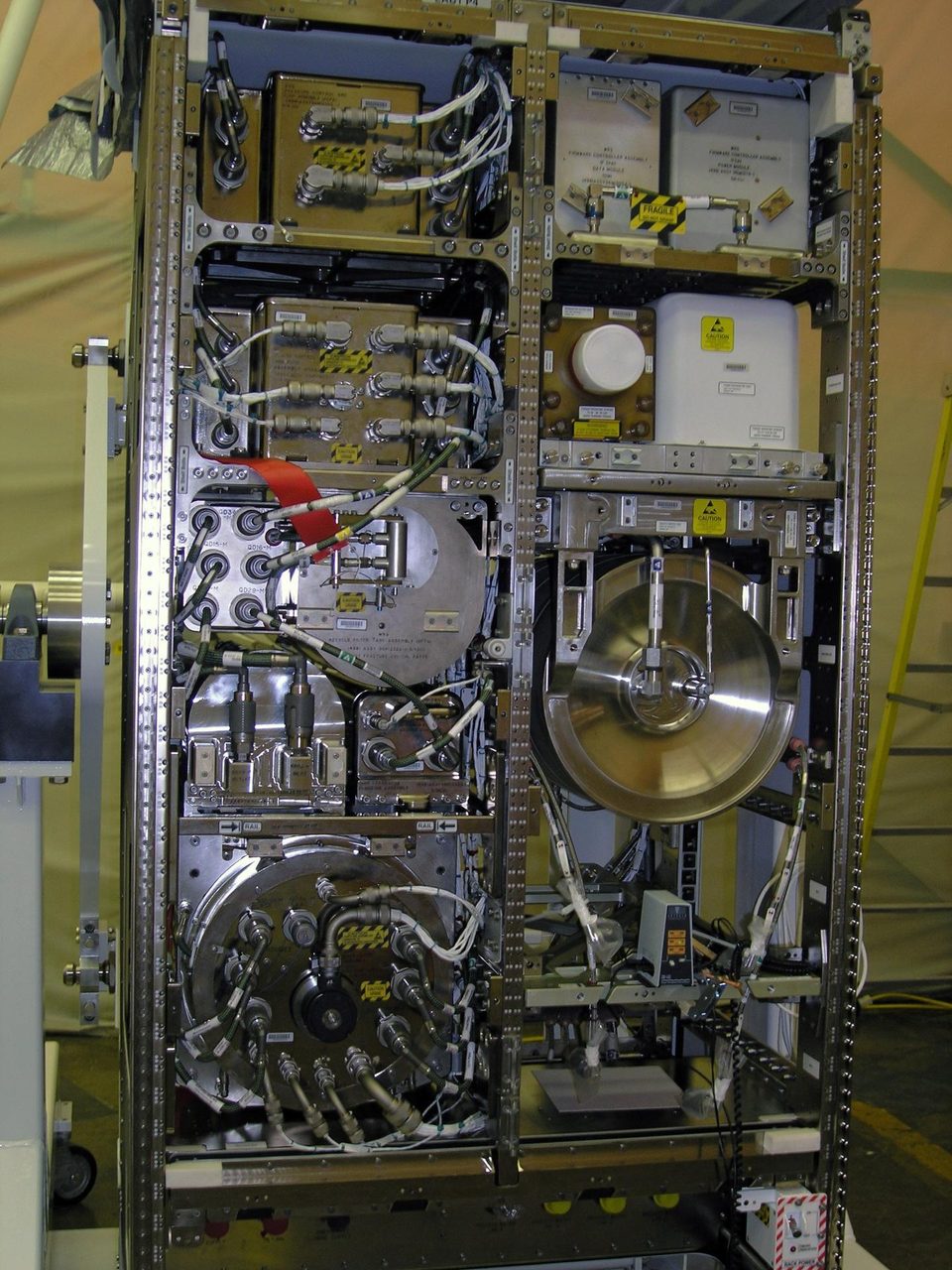
Flight-proven; 98% water recovery demonstrated 2023
What it is
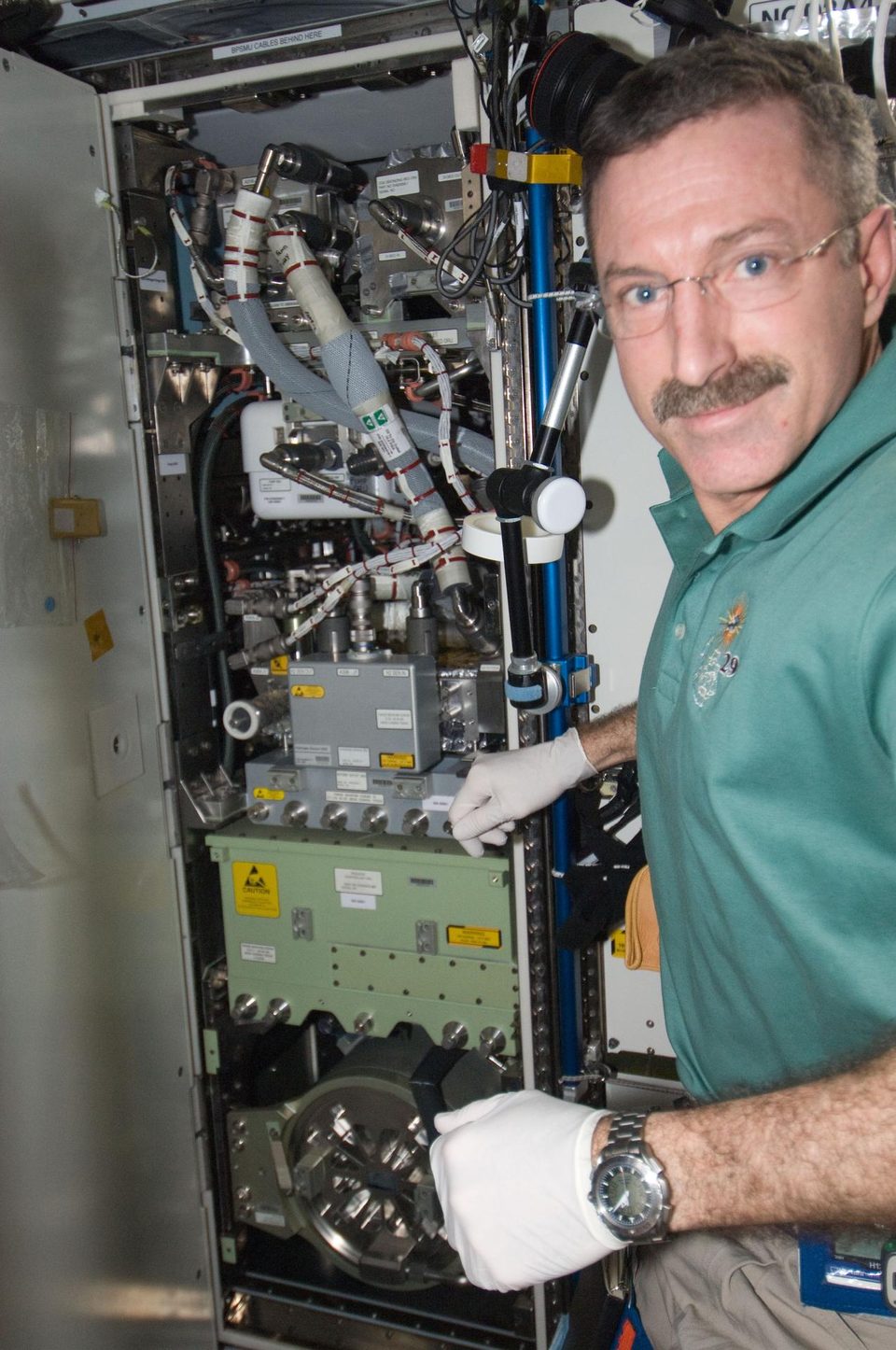
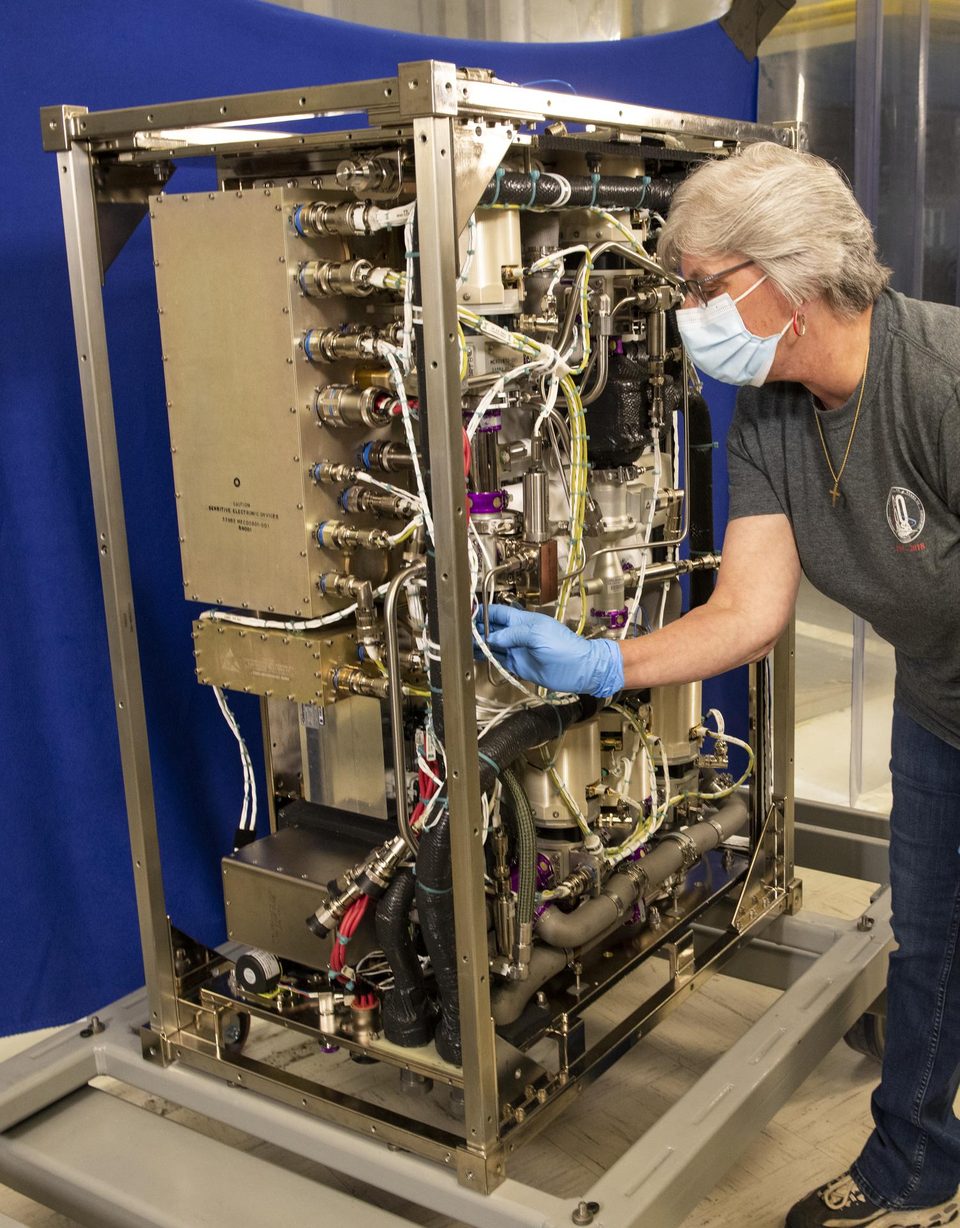
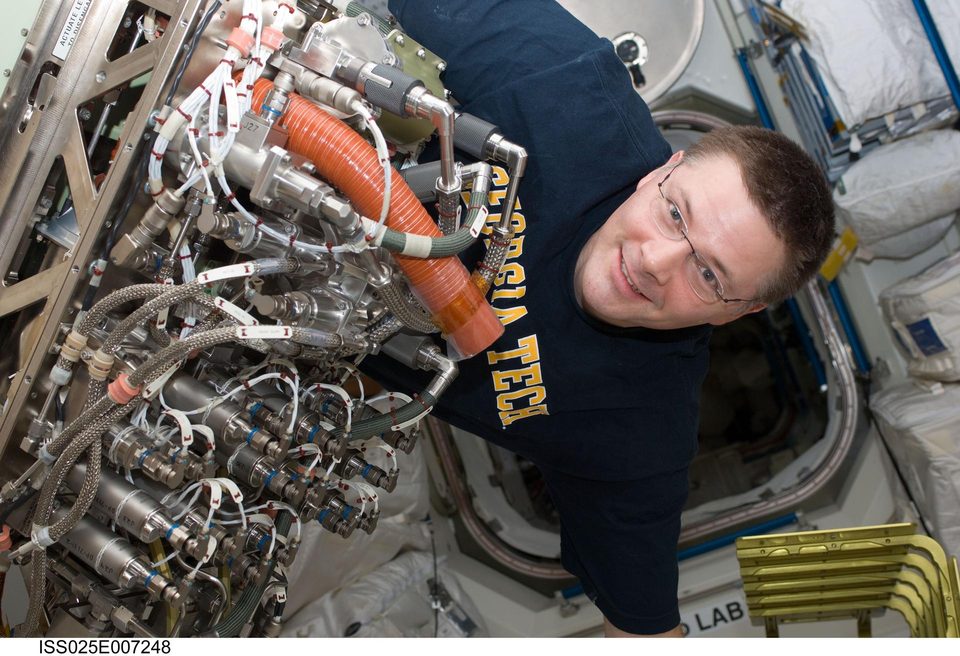
The Environmental Control and Life Support System (ECLSS) is the set of machines that keeps the International Space Station’s air and water fit for people. It controls cabin pressure, oxygen, ventilation, fire detection, waste and water supply. The regenerative part has three main pieces: the Water Recovery System, the Air Revitalization System and the Oxygen Generation System. They were designed and tested by NASA’s Marshall Space Flight Center with industry partners (NASA). Boeing, Lockheed Martin, Honeywell and UTC Aerospace Systems all took part (Wikipedia).
The US oxygen generator became operational in July 2007. The Water Recovery System arrived on shuttle flight STS-126 in November 2008 (Wikipedia). By April 2019 the oxygen generator had made more than 16,184 lb (about 7,340 kg) of oxygen (NASA NTRS). Russia runs its own parallel systems, Elektron for oxygen and Vozdukh for CO2 (Wikipedia).
The headline number is water. NASA’s reference page still says the system recovers “about 90 percent” of station water (NASA). In June 2023 NASA reported that a new Brine Processor Assembly lifted total recovery from 93-94% to 98%, the goal NASA sets for missions beyond low Earth orbit (NASA; Space.com). NASA now uses the ISS as a testbed to mature this hardware for Moon and Mars missions (NASA NTRS).
Why Open Moon uses it
Open Moon’s first habitat (M08) uses ISS-derived life support for water recovery, oxygen generation and CO2 removal, topped up with water and oxygen from the M06 pilot plants. The M08 exit criteria require life support to run uncrewed for three months before the first crew arrives. M09 (permanent crew) then needs at least 90% water recovery averaged over a year and adds brine processing, electrolysis, a four-bed CO2 scrubber and a Sabatier reactor.
The reason is mass. NASA’s lunar logistics study found that with fully open-loop life support, water and gases are about half of all logistics needs. Closing the oxygen and water loops could largely remove needs worth almost 40% of the total. Packaging and carriers add another 75-150% on top (NASA NTRS). Without recycling, every crew-year on the Moon would need far more cargo landings. Open Moon picks the ISS system because it has run with crews on board since 2007-2008, while the alternatives below are less proven.
How it works
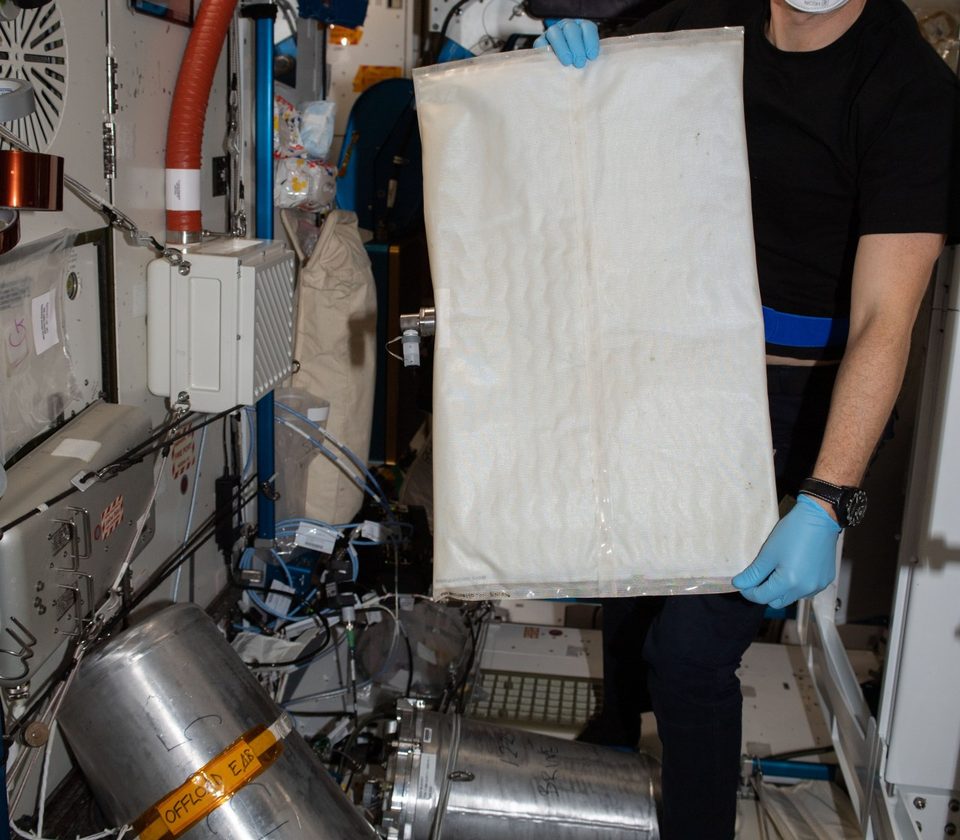
- Water. The Urine Processor Assembly boils urine at low pressure in a spinning distiller, since there is no gravity to separate liquid and gas (Wikipedia). Its water joins cabin condensate and other wastewater. The Water Processor Assembly then filters it, breaks down trace contaminants in a catalytic reactor, checks purity with sensors, adds iodine and stores it (NASA). The Brine Processor blows warm, dry air over leftover brine through a membrane. Cabin air systems then collect that water too (NASA).
- Oxygen. An electrolysis cell stack splits recovered water into oxygen for the cabin and hydrogen (NASA).
- CO2 and trace gases. Molecular sieve beds capture CO2. Charcoal, a catalytic oxidizer and a lithium hydroxide bed remove trace contaminants (NASA).
- Oxygen recovery. A Sabatier reactor combines waste hydrogen with crew CO2 to make water and methane, and the methane is vented (NASA). Venting that methane wastes hydrogen, which limits oxygen recovery from CO2 to about 50% (NASA NTRS).
| Specification | Value | Source |
|---|---|---|
| Total water recovery | 98% (with brine processor, 2023) | NASA |
| Urine water recovery (US urine) | 85-87%, target 90% | NASA NTRS |
| Urine processor design load | 9 kg/day (6 crew) | Wikipedia |
| Oxygen output, nominal | 12 lb/day (about 5.4 kg), enough for 4 crew | NASA NTRS |
| Oxygen output, range | 5.1-20.4 lb/day (about 2.3-9.3 kg) | NASA NTRS |
| Oxygen use assumed per crew member | 1.874 lb/day (about 0.85 kg) | NASA NTRS |
| New CO2 scrubber (4BCO2) goal | 4 crew-equivalents, 3 years with no unplanned maintenance | NASA NTRS |
| Oxygen recovery from CO2 (Sabatier) | about 50% | NASA NTRS |
Limitations and open issues
- Reliability. The original CO2 remover (CDRA) has a long history of unplanned maintenance and obsolete parts (NASA NTRS). Its four-bed replacement has been removing CO2 on the ISS since October 2021 and is still being turned into a standard ISS system (NASA NTRS).
- Past failures needed Earth. The urine distiller failed one day after installation in 2008. In 2010 the US oxygen generator stopped working well, and the crew relied on Elektron and shipped oxygen for six months until a repair kit arrived (Wikipedia). A Moon base cannot count on fast resupply like this.
- Built for a supply chain. ISS hardware uses swappable units that are often returned to Earth for refurbishment. NASA says exploration missions will lack that supply chain and is only now testing component-level repair on the ISS (NASA NTRS).
- Spares mass. Regenerative systems cut water and gas resupply but generally add subsystem mass and spares (NASA NTRS).
- Oxygen loop not closed. The Sabatier step recovers only about half of the oxygen in CO2. Full hydrogen recovery (for example methane pyrolysis) is at brassboard stage (NASA NTRS).
- Untested on the Moon. NASA’s exploration testbed mimics a Mars transit habitat in microgravity (NASA NTRS). No published test covers the hardware in lunar gravity or with lunar dust.
- Food and nitrogen are not recycled. The system handles air and water only. MELiSSA-type biological loops aim to close food too (Wikipedia).
- Long-run 98%. NASA reported 98% from assessments of the brine processor demonstration (NASA), while its reference page still quotes about 90% (NASA). Average year-round recovery is not published.
| Alternative | How it compares | Status |
|---|---|---|
| ESA Advanced Closed Loop System (ACLS) | A single European rack that captures CO2 with an amine scrubber, turns half of it into water in a Sabatier reactor and makes oxygen by electrolysis. It saves about 400 litres of resupply water a year, but it vents the other half of the CO2 and alone supports only about three crew. | Delivered to the ISS in 2018 as a 1-2 year demonstration; it worked and stays on board permanently. |
| Open-loop stored consumables | Bring all oxygen, nitrogen and water in tanks and throw waste away, as Apollo did. Very simple and reliable, but NASA estimates water and gases are then about half of all lunar logistics mass, before packaging. | Mature and flight-proven; practical only for short stays. |
| MELiSSA bioregenerative loop (ESA) | Uses bacteria, algae and plants in linked compartments to turn waste into oxygen, water and food. It could close the food loop, which the ISS system cannot, but it is far larger, slower and less mature. | ESA-led research since 1989, with about 30 member organisations in 2023; still in development. |
| Lunar Palace 1 (Yuegong-1) bioregenerative habitat | A sealed Chinese ground facility where plants regenerate oxygen and crews grow most of their food. It shows high closure on Earth, but needs large growing areas and has never operated in space or partial gravity. | Ground analogue; 370-day crewed test completed in 2017-2018. |
| Oxygen from lunar regolith (molten salt electrolysis) | Makes breathing oxygen from Moon dirt instead of recycling it. It does not recycle water or remove CO2, so it would back up or top up a recycling system rather than replace it. | Laboratory prototype at ESA ESTEC since 2020. |
- official NASA Marshall: Environmental Control and Life Support Systems (ECLSS) reference (Apr 2025)
- official NASA: NASA achieves water recovery milestone on International Space Station (98%) (Jun 2023)
- official NASA NTRS: International Space Station as a testbed for exploration ECLSS, 2024 status (ICES-2024-316) (Jul 2024)
- paper NASA NTRS: Status of ISS water management and recovery (ICES-2024-317) (Jul 2024)
- paper NASA NTRS: Advanced Oxygen Generation Assembly for exploration missions (ICES-2019-107) (Jul 2019)
- paper NASA NTRS: 4-Bed CO2 Scrubber, from design to build (ICES-2020-178) (Jul 2020)
- paper NASA NTRS: Status of the Four Bed CO2 Scrubber ISS technology demonstration 2024-2026 (Jul 2026)
- paper NASA NTRS: Hydrogen recovery by methane pyrolysis to elemental carbon (ICES-2019-103) (Jul 2019)
- official NASA NTRS: Lunar logistics drivers and needs (Moon to Mars architecture white paper) (Feb 2024)
- wiki Wikipedia: ISS ECLSS (Nov 2026)
- press Space.com: ISS hits 98% water recycling milestone (Jun 2023)
- wiki Wikipedia: MELiSSA (2026)
- wiki Wikipedia: Lunar Palace 1 (2026)
- official ESA: ESA opens oxygen plant, making air out of moondust (Jan 2020)
Summary
| System | Habitation and life support |
| Phase | 2 |
| Milestones | M08 |
| Readiness | TRL 9 / 9 |
| Plan status | ready to use |
Sources
- Space.com: ISS hits 98% water recycling milestone (status and facts)
- Image: NASA
More sources are on each milestone page that uses this technology.