Astrolab CLV-1 (LTV)
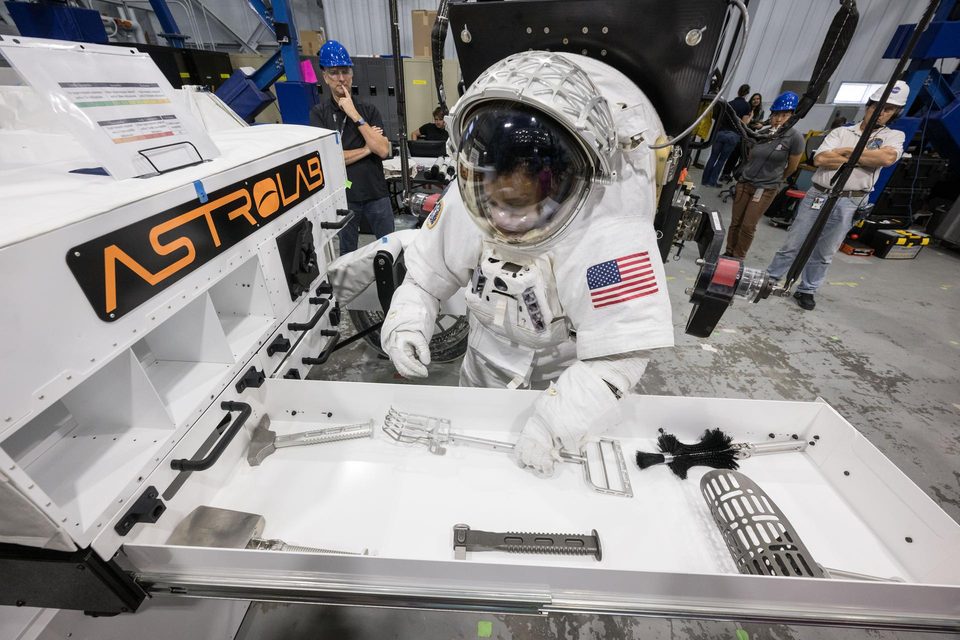
NASA task order $219M (May 2026); flight units to be qualified over the next 18 months; delivery 2028
What it is
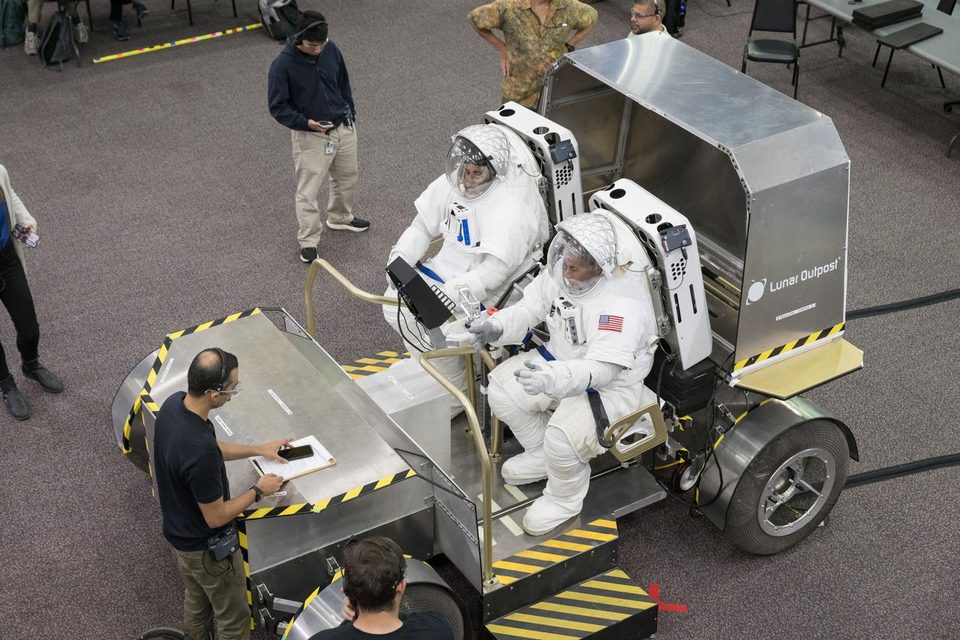
The Crewed Lunar Vehicle, or CLV-1, is an unpressurised rover that two astronauts in spacesuits can drive on the Moon. It is built by Venturi Astrolab of Hawthorne, California, with teammates Axiom Space, Interlune and Odyssey Space Research (Astrolab). It is one of the two lunar terrain vehicles (LTVs) NASA picked for its Moon Base plan (NASA).
CLV-1 grew out of Astrolab’s larger FLEX rover. Astrolab first said in 2023 that it would offer FLEX for the LTV competition (SpaceNews, Wikipedia). In April 2024 NASA chose Astrolab, Intuitive Machines and Lunar Outpost for year-long feasibility studies under the LTV Services contract, which has a combined maximum value of $4.6 billion (NASA). NASA later asked industry for smaller rovers on a faster schedule, and Astrolab adapted FLEX into CLV-1 (Astrolab).
On 26 May 2026 NASA awarded Astrolab $219 million under a firm-fixed-price, milestone-based task order to build and deliver the rover. Over the next 18 months the companies will finish their designs, run crewed evaluations and qualify flight units. Blue Origin got $188 million, with options worth $280.4 million, to land CLV-1 and Pegasus near the south pole. NASA aims to have them there by 2028 (NASA). Astrolab says CLV-1 will launch in early 2028 (Astrolab).
Why Open Moon uses it
CLV-1 is one of the two crew and cargo rovers in milestone M07 (Mobility). Suited crews can only walk a short way from a lander or habitat. A rover takes them, their tools and their samples much farther (NASA). Between crew visits it can be driven from Earth or drive itself, so it keeps scouting terrain and moving materials when no one is there (NASA).
Open Moon plans to lease rover services rather than own the hardware. That is how NASA buys them too (NASA). Flying two different rovers, CLV-1 and Pegasus, means one failure does not ground all surface travel. Without an LTV, early sorties would be limited to walking range. Site surveys for later habitat and ISRU milestones would also be slower.
How it works
CLV-1 is a battery-electric rover. It uses the same tires, batteries and battery management system as earlier Astrolab rovers, all made by partner Venturi Space (Astrolab). Crew sit to drive. A perception system gives semi-autonomous driving with obstacle detection and hazard avoidance. Adaptive suspension keeps the chassis level and can lower the rover to make getting on and off easier (Astrolab). Mission Control can also run it remotely (Astrolab).
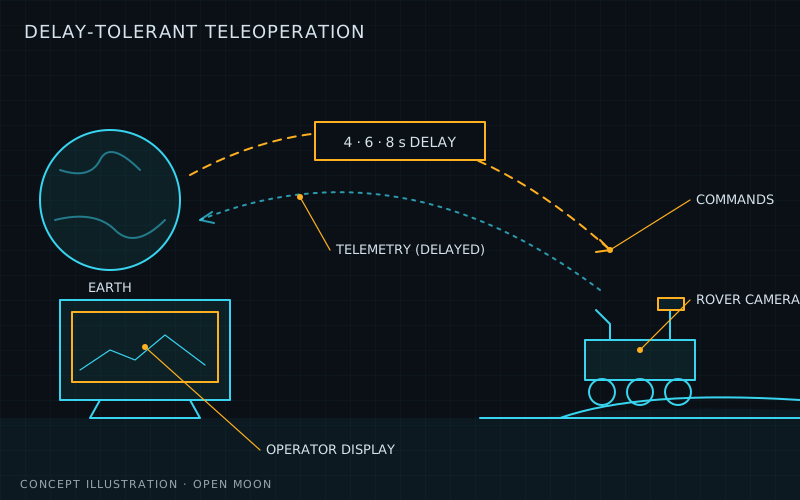
NASA’s tests of remote LTV driving put operators under 0, 4, 6 and 8 second delays. The goal was to see if a rover could cover 6 km in 24 hours. Operators drove slower and said the workload was much higher with a delay (NTRS).
| Specification | Value | Source |
|---|---|---|
| Crew | 2 suited astronauts plus tools | Astrolab |
| Mass | max 950 kg (NASA: about 2,000 lb) | Astrolab, NASA |
| Speed on level ground | 10 km/h (NASA: more than 6 mph) | same |
| Stowed size | about 2 m long, 2.3 m wide, 2.2 m tall | Astrolab |
| Deployed size | about 4 m long, 2.3 m wide, 2.6 m tall to antenna top | same |
| Operating range (company claim) | 500+ km | Astrolab |
| Control | crew-driven or semi-autonomous from Mission Control | Astrolab |
| Delivery | Blue Origin lander, south pole region, 2028 | NASA |
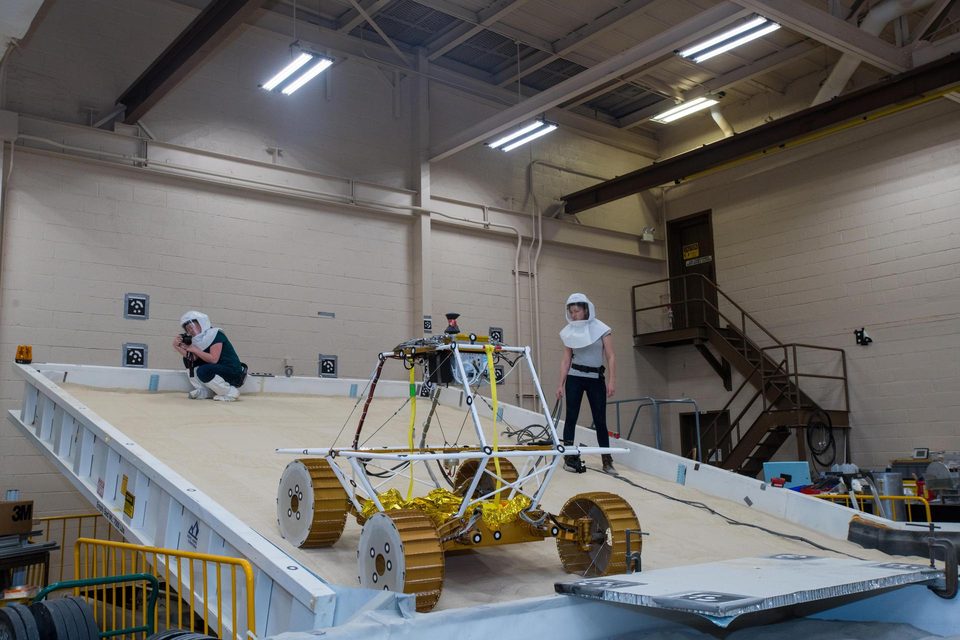
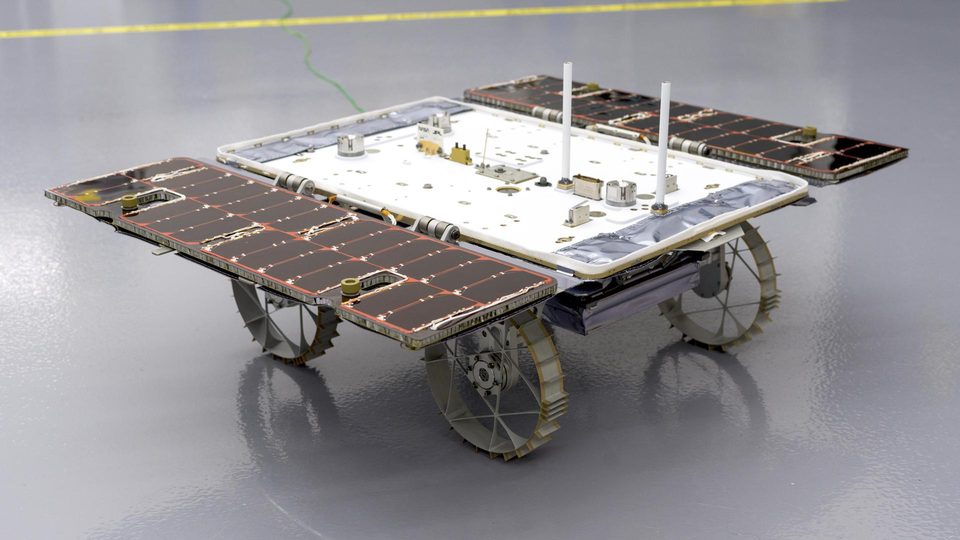
Astrolab is also flying its smaller FLIP rover, about 480 kg, on Astrobotic’s Griffin-1 mission (Astrolab). NASA says FLIP will help mature mobility systems for later LTV operations (NASA). NASA lists Griffin-1 for late 2026 (NASA).
Limitations and open issues
- New design on a tight clock. CLV-1 was defined after NASA changed its requirements. Flight units still have to be qualified within about 18 months (NASA).
- No lunar flight yet. Astrolab’s heritage is from FLEX ground testing (Astrolab). Its first Moon rover, FLIP, has not yet launched (NASA).
- Unpublished numbers. Astrolab has not published CLV-1’s battery capacity, design life, payload mass or whether it can survive the lunar night. NASA says Pegasus can run for a year but gives no lifetime for CLV-1 (NASA).
- Mostly crew, not cargo. CLV-1 is built mainly to carry astronauts and their supplies, not external payloads (Astrolab). Heavy hauling needs FLEX-class rovers or utility robots.
- Depends on a lander. Delivery relies on a Blue Origin lander and on the 2028 schedule holding (NASA).
- Remote driving is slow. Time delay cuts speed and raises operator workload (NTRS).
| Alternative | How it compares | Status |
|---|---|---|
| Lunar Outpost Pegasus (LTV) | The other rover NASA picked in May 2026, for $220 million. NASA calls it lighter, says it can run for up to a year and drive at more than 9 mph manually, autonomously or by teleoperation. Having both gives redundancy; it is a partner, not a replacement. | NASA task order May 2026; Lunar Outpost targets a November 2027 delivery and a 2028 launch |
| Intuitive Machines Moon RACER | One of the three 2024 LTV feasibility designs. It was not one of the two rovers NASA funded in May 2026, so it has no flight path today. | Feasibility study only (2024); not selected for the 2026 task orders |
| Astrolab FLEX | The larger rover CLV-1 was adapted from. Astrolab lists up to 2,000 kg of payload and an underslung interface that can carry 3 m3 containers, so it is a better cargo hauler, but it is bigger than NASA's revised crew-rover needs. | Full-scale working prototype since 2022; no flight contract |
| Apollo Lunar Roving Vehicle | Boeing's 1971-72 rover: 210 kg empty, folded inside the lunar module, driven by crews only. Proven on the Moon, but it had no autonomy or remote driving and it is no longer built. | Flown on Apollo 15, 16 and 17; out of production |
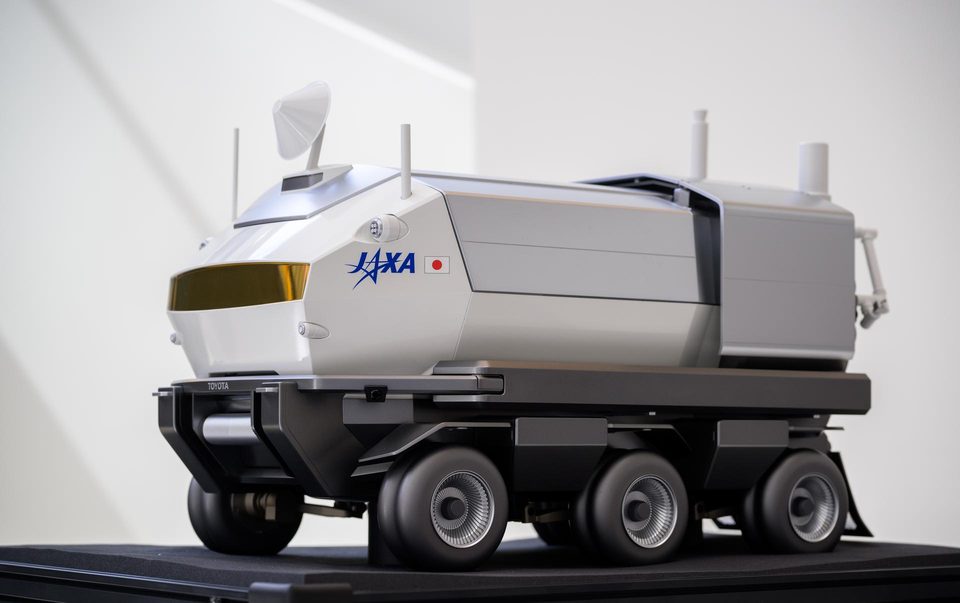
| JAXA/Toyota pressurised rover (Lunar Cruiser) | A closed cabin where 2 astronauts can live for up to 30 days. It does a different, longer-range job and arrives much later; it does not replace a light suited-crew rover for short trips. | NASA-Japan agreement April 2024; planned for Artemis VII and later |
- official NASA RELEASE 26-046: NASA provides update on Moon Base rovers, landers, missions (May 2026)
- official Astrolab: NASA selects Astrolab to provide lunar rover for Artemis astronauts' return to the Moon (May 2026)
- official Astrolab: CLV product page (2026)
- official Astrolab: Mission 2 (CLV-1 launch early 2028) (2026)
- official Astrolab: FLEX rover (2026)
- official Astrolab: Mission 1 (FLIP rover on Griffin-1) (2026)
- official NASA: Lunar Terrain Vehicle (2026)
- official NASA Moon Base: Phases (Phase One elements, including the LTVs) (2026)
- official NASA: NASA selects companies to advance Moon mobility for Artemis missions (LTV Services, $4.6B) (Apr 2024)
- official NASA NTRS 20240001217: Remote driving of an Artemis LTV under 0-8 s communication delays (2024)
- official NASA launch schedule (Moon Base: Voyager Griffin-1, late 2026) (Nov 2026)
- wiki Wikipedia: Lunar Terrain Vehicle (2026)
- wiki Wikipedia: Lunar Roving Vehicle (Apollo) (2026)
- press SpaceNews: Astrolab to send rover to the Moon on SpaceX's Starship (Mar 2023)
Summary
| System | Mobility and robotics |
| Phase | 2 |
| Milestones | M07 |
| Readiness | TRL 6 / 9 |
| Plan status | ready to use |
Sources
- NASA RELEASE26-046: NASA provides update on Moon Base rovers, landers, missions (status and facts)
- Image: NASA/Robert Markowitz
More sources are on each milestone page that uses this technology.